Classic Literature

Immerse yourself in the timeless works of classic literature with this category. Stefan Zweig’s “The World of Yesterday. Memoirs of a European” and Jane Austen’s “Lady Susan” offer glimpses into different eras and showcase the enduring power of literary masterpieces. These reviews will introduce you to the eloquent prose, rich character development, and social commentary that define classic literature. Join us as we explore the works that have stood the test of time and continue to captivate readers.

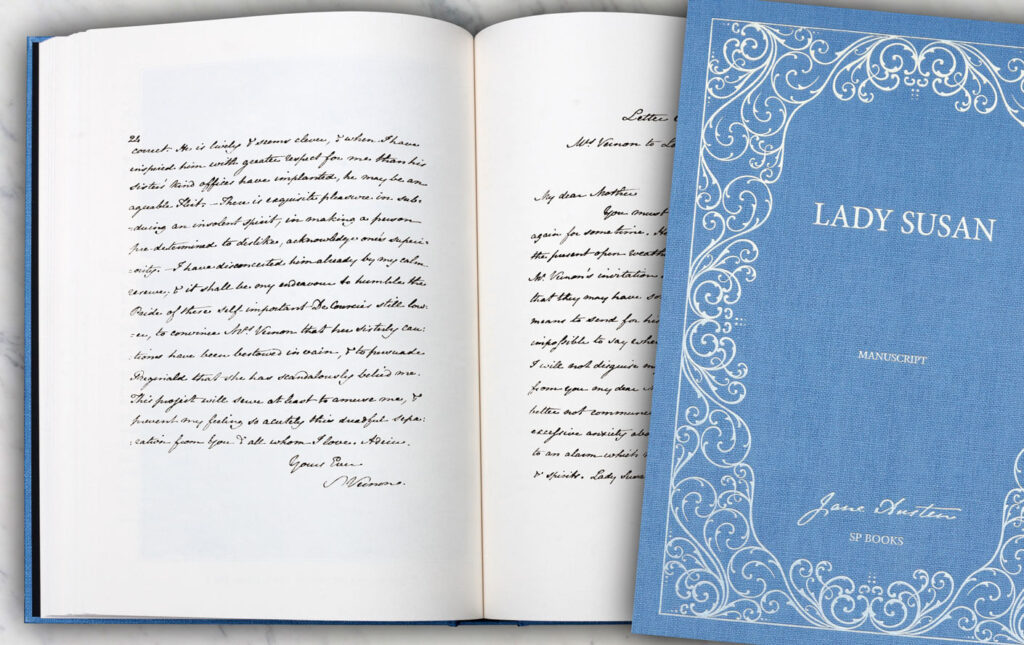
lady susan book cover

Book Review: “Lady Susan” by Jane Austen

In “Lady Susan,” Jane Austen takes readers by surprise with a departure from her usual prototype of female literary characters. As an ardent admirer of the Dashwood sisters and considering Lizzy Bennet the epitome of a perfect heroine, encountering Lady Susan has left me questioning the comedic charm of Austen’s other works. Rediscovering Austen’s Classic: A Powerfully Flawed Protagonist Published posthumously, “Lady Susan” by Montesinos publishing house showcases Austen’s ability to transform beauty into a double-edged sword. She presents a woman with a captivating power over the will of others, defying the norms of her time when docility was expected. Through a captivating epistolary format, Austen keeps readers engrossed in a plot that unfolds through a series of letters, leaving us craving more. Resemblances to Louisa May Alcott: A Surprise Twist In many ways, Austen’s portrayal of characters in “Lady Susan” reminds me of Louisa May Alcott’s work under the pseudonym AM Barnard. Both authors share a similar narrative style and create intriguing characters. In the case of “Lady Susan,” I found myself even more astonished than when I read Alcott’s dark work, “Behind the Mask,” from the creator of Jo March. The Unapologetic Lady Susan: A Character Study Lady Susan, portrayed as a heartless shrew, craves constant attention and treats her own daughter as an adversary compared to the men she considers for her future. Despite being a recent widow, she shamelessly flirts with both single and married men, as long as they possess the financial means to secure her desired lifestyle. Through the letters we read in “Lady Susan,” we witness her calculated visits, manipulations, and her polite and convincing behavior, followed by her candid discussions with an equally self-centered and malicious friend. It is truly fascinating. A Revealing Quote: Lady Susan’s Mindset A defining moment in “Lady Susan” encapsulates the protagonist’s mindset. When discussing her daughter and a boy she seeks to manipulate into marriage, Lady Susan says, “I have to punish Frederica, and most rigorously, for having appealed to Reginald’s intercession; I am to punish him for willingly assenting and his subsequent conduct. I must punish my sister-in-law for the insolent look of triumph she has been wearing since Sir James’s departure (…) and I must take revenge for the humiliations inflicted on me in recent days.” Engrossed in Lady Susan’s Machinations Lady Susan’s eventful agenda keeps readers captivated, unable to look away from the twisted workings of her mind. Witnessing her actions unfold through Austen’s expert storytelling is a delight that combines both admiration and disdain for such a complex character. Unveiling a Lesser-Known Side of Jane Austen Discovering this facet of Jane Austen in “Lady Susan” has been a delightful experience. It is intriguing to imagine what Austen might have created had she been granted more time to introduce characters like Lady Susan. Despite the passage of time since its original publication, “Lady Susan” continues to captivate new readers, offering a character who can be both despised and admired simultaneously. A Satisfying Literary Pleasure Reading “Lady Susan,” written by Austen in her twenties and preserved with remarkable freshness through the centuries, has been an immensely satisfying literary pleasure. It is a work that should be enjoyed by all readers seeking entertainment within a world of intrigues and conspiracies.

Book Review: “Lady Susan” by Jane Austen Read More »

stepan zweig book cover

Book Review: “The World of Yesterday. Memoirs of a European” by Stefan Zweig

Stefan Zweig, in his work “The World of Yesterday. Memoirs of a European,” begins by acknowledging that he has never considered himself important enough to share the story of his life. Instead, he chooses to reflect on his generation, which he considers a “lost generation” due to the immense hardships they endured. Zweig compares his own experiences to the previous generations who lived in times of peace, unaffected by the horrors of war and the frontlines. A Historical Review of a Remarkable Writer Published by Edaf, “The World of Yesterday. Memoirs of a European” offers a remarkable historical account by an extraordinary writer. Zweig’s honest and impartial portrayal of his era serves as a testament to his contemporaneity like no other. He vividly expresses the struggles and triumphs of his generation, allowing future generations to understand the resilience required to endure such turbulent times. Exploring Origins and Reflections on Jewish Life Zweig delves into his personal origins, specifically the Jewish families living in Austria. He highlights the entrepreneurial success achieved by his paternal family through hard work and perseverance. On the other hand, he reflects on the tendency of his maternal family, who were already wealthy, to adopt a superior attitude towards others due to their financial status. This context provides an opportunity for Zweig to examine Jewish life centered around family businesses and the pursuit of wealth. Through “The World of Yesterday. Memoirs of a European,” readers gain deeper insight into the person Zweig was, his emotions, and his experiences. We discover that he inherited from his father the desire to remain inconspicuous, rejecting significant positions or titles to preserve his privacy. Moreover, we witness his anguish upon learning that his life’s work was destroyed by the Germans solely because of his Jewish heritage. He refers to Judaism as the “religion of his parents” and admits to feeling like a citizen of no country, not even his beloved Europe, which he felt betrayed by during the Second World War. A Reflection on Social Status and Education Zweig recalls his mother’s sense of superiority, inherited from her wealthy family, which she extended to everyone, including Zweig himself, his brother, and his father. He delves into the obsession of some families to maintain social status and honor, often pushing their children to excel academically and earn prestigious titles. He explores the sacrifices families make to ensure their children receive an education, emphasizing the honor associated with having a child recognized in the intellectual world, even for the poorest families. The Need for Jewish Disassociation from Wealth Zweig explores the Jewish people’s desire to distance themselves from the accumulation of wealth over generations. He observes how younger members of the community seek professions beyond family businesses, often pursuing intellectual pursuits to avoid the “curse of money.” Reflections on the Austrian Education System “The World of Yesterday. Memoirs of a European” sheds light on the educational system prevalent in Austria during Zweig’s time, a system that he believes did not serve him well. He credits his hunger for knowledge, acquired through books and theater, for enabling him to rise above the limitations imposed by the system. He criticizes the government for fostering a youth that would mindlessly follow family businesses without questioning the status quo. A Gift of Understanding Stefan Zweig Discovering Stefan Zweig through his own thoughts and words is a gift that no fan of the author should overlook. Zweig remains true to his promise of objectivity, allowing readers to comprehend, appreciate, and enjoy his work. Each page offers continuous learning and a deeper connection to the experiences of a generation defined by adversity.

Book Review: “The World of Yesterday. Memoirs of a European” by Stefan Zweig Read More »